updates during the beginning of scorpio season
A few snippets of how I'm feeling, doing, listening, being, acting today.

Some relevant political commentary from MAKC:
Yesterday my boss, who I have in some ways appreciated for his laid-back-ness, was apparently caught attempting to steal carton(s) of cigarettes form the store. I and others also have reason to believe this was not the first time, though that doesn't matter much to me and I don't plan on telling superiors. I could say a lot of things about it... but I'll just say it was especially shocking how suddenly something to consistent and regular can change so suddenly. I will probably never see that boss again - at least not at the store.
And today the truth came out. Most of my co-workers said Good Riddance to him. They thought he was a horrible manager - perhaps a decent person. Just a really bad boss. Poor communication, as lax and lazy and careless as possible. They said to me, Didn't you notice these things? Well yeah but I mean, it is hard to judge whether these things are odd or normal when one, such as myself, is a newbie in a place and does not yet know the culture or the norms in the space. Every place is different. So anyway, for now, we do not have a manager.
I know I have emotion about all of this. I felt sort of numb and overwhelmed about it yesterday. I knew I felt surprised, shocked. How else did I feel? How then should allow those feelings to be felt? Where were they? Was I avoiding them consciously, unconsciously? How could I gently guide myself to not avoid feeling the feelings? Lots of interesting thoughts.
Today I think I might have sunk a little more into feeling the varying emotions. And there is anxiety.
My co-worker whom I get along with very well, Ron, asked me what I would change is I was manager. I suggested higher wages to prevent theft - LIVING wages. He had encouraged me to share my ideas, and I noticed how nervous and anxious and fearful I felt in sharing these ideals. I have felt that fear in similar contexts before. it's like I'm afraid of being deeply disappointed. Afraid at having to acknowledge my dreams and ideals and heart-longings, and see them totally shot down by and in reality. Okay, maybe it's not that drastic, linear, instantaneous, extreme, black and white... But I'm just describing the fear. not saying it's "true" or factual.
I've been living a very full scheduled life recently. The two biggest things coming up in the next 2 weeks are my Thriller dance performance with a group at a Halloween parade and taking the GRE.
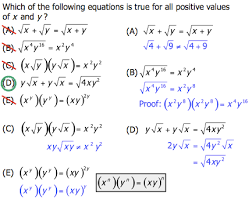
Both of these things require a lot of practice and development of mental coordination/memorization of formulas & patterns. In both cases, I definitely need to practice as much as possible! And then because my supervisor was unexpectedly "released" (I don't think they actually call it termination yet but I don't think he'll be back), the store director is asking for more hours from anyone who is free to do all the wok our old boss won't be doing. Today and tomorrow I have/had 9 hour work days. That is long for me. 8 hours is my typical recently maximum. Making money is good.
A few days ago I called Ben M and we spoke for the fist time in over a year. My therapist asked me, How does it feel to be repairing a relationship? I said, Is that what (you think) I'm doing? I've pondered that a bit. I guess I am. I don't think I've done that a lot in my life thus far. I'm learning.
I'm going to finish this up now to honor my need for really good sleep.


Some relevant political commentary from MAKC:
Some Thoughts On Voting & Bourgeois ElectionsSo I did a thread yesterday, because it is election season again, and we are constantly being told that this is an important election. I actually agree that it is important, but I think we should never overestimate the importance of an individual election in terms of how we should be organizing or working to shift the political landscape in the US. Nor should we miss the opportunity to potentially reduce harm and increase our organizing power, particularly in this political moment.
For most of us on "the left," and when I say that, I mean those of us who oppose capitalism and systems in which the capitalist class is the ruling class of society, election season can often be a depressing time. It is a time when our bold visions for the future face the material realities of the electoral system in our bourgeois settler empire head-on. It can be a time when the political lines of different radical organizations are at odds and sectarianism increases. Some organizations that engage in electoral strategy can develop factions based on different theories of change, or very real concerns about "progressive" candidates, which lead to splits or people leaving.
Whatever the case, election season and the lead-up to it, is often a stressful time for anyone who is engaged politically, but there are potential opportunities based on what's on the ballot as well as how we organize leading up to and in the aftermath of an election.
What's not on the ballot?
One main issue with elections within our system is the things that are not on the ballot. We should rigorously critique Democratic and "Progressive" politicians for being a part of the same hegemonic political establishment that gives a blank check to our military for endless imperial wars, AFRICOM, CIA war crimes, regime change, and everything else that comes with US imperialism. We should hold them to the fire for their shitty ass alliances with police and corrections officers "unions" that push some of the most fascistic domestic policy possible. We should push them on their complete non-attention to things like the 10 Demands of the Prison Strike, calls to abolish ICE, opposing the ongoing foreign wars, etc.
It is for these reasons, among others, that even at times when I felt the need to vote for political candidates, I have never felt comfortable extending an actual endorsement to a state or national or even mayoral candidate. It is so rare that one comes across a politician that has the potential to get elected in our system that actually opposes these forces. Sometimes you can find examples at the city council level in "progressive" cities or perhaps among state representatives in those areas, but these individuals tend to be extreme exceptions with severe limits on their own political futures, beyond their current political offices.
I also understand, and don't shame, folks who refuse to vote for politicians with these politics, because they don't want to vote for someone who will drone children in the Middle East or Africa. These are very valid objections and we should sit with these contradictions when and if we choose to vote. It is perfectly understandable for people to refuse a choice, which is not really a choice, to refuse a false charade of representation.
However, as we have seen with the Trump administration - and as radicals saw in the 70's with Nixon or the 80's with Reagan in particular - there are degrees to the severity and nature of US fascism and imperialism. This is not a "lesser of two evils" argument. What it is, is an honest assessment of the political landscape in this moment. The reality is that the movement that has a chance to possibly limit the scope of the very real impending climate genocide will not come from either of the ruling class parties in the US. The movement to abolish ICE, or abolish prisons, or dismantle the empire's military industrial complex won't come from them either. These institutions are taken as givens within the political system and candidates within these systems are simply not allowed to vigorously question them and remain in power. But that doesn't mean that we should be completely unconscious of the political landscape we will be fighting on over the next few years.
There are things like trans rights, women's rights, immigration, and healthcare which matter to a lot of people and there are distinctions within the ruling class ideology on these issues between the factions of the ruling class duopoly that materially impact people's lives. The important thing to remember is that voting for a Democrat or even a "Progressive" won't just magically change people's lives. The reality is that a great deal of how Democrats and "Progressives" treat these issues is by dressing up policies that are actually conservative, and in some cases quite fascistic, in the language of liberal identity politics. Essentially what the Democrats have is their own form of "dogwhistle" that appeals to certain groups on identitarian needs (very much still prioritizing the needs of wealthy cis white men and women by the way). The rhetoric for the Democrats will never match the reality, but as we see these politicians picking up "left" talking points like "abolish ice," "end cash bail," or "medicare for all," or even Bernie's half-baked approach to "internationalism" we saw recently, it means they are becoming more vulnerable to appealing to the left's "ideas," even if their plans for putting these concepts forward are mired in the machinations of the ruling class.
These are openings we should seek to exploit, by teaching people about the real bases of these ideas and how they would actually look in practice.
What Might Voting Achieve?
Understanding all of that, I never attempt to dissuade people from voting. I myself vote, so for me to suggest to someone else that there is no point voting would be hypocritical and deny them some form of political agency, however limited that might be. What I do think is important though is our approach to voting, and our approach to political engagement with bourgeois politicians. I think we often examine the political playing field in the wrong way.
The greatest achievements that we might get from voting in an ideal world go something like this:
1) We identify a shitty old school pretty fascistic Democrat in a strategic position, and we seek to primary him or her with a more "progressive" replacement. We mobilize a great deal of the "left" to make that happen and let's say we get someone like Larry Krasner in office.
People like Krasner are a mixed bag, he may institute some new "progressive" policies, he hopefully will reduce the number of people incarcerated in our city. They will also likely make some really bad political concessions to the fascistic police unions, because this is the nature of being a bourgeois politicians in the US. They will also face firm opposition from within the system for anything truly radical they seek to implement. At the end of the day, this is an avenue to a reform which has the potentially to materially benefit some people, while perhaps harming others, but the net result is generally somewhat positive.
2) We identify a "progressive" policy platform that we want to push through and we create a ballot initiative or something of that nature to pass. Let's say legalizing weed for example. We mobilize, we pass it. When it gets to the "rule making" phase where state politicians get to determine how the policy actually roles out, it will get manipulated into a very pro-capitalist measure and one that likely still criminalizes people of color disproportionately and disproportionately benefits wealthy white folks. Again at the end of the day, these types of policies tend to be better than those that precede them, but they don't tend to put in place anything that represents the much needed radical shift in material conditions for marginalized people.
3) We flip a house or senate from majority GOP to majority Democrat and create a political "check," with more teeth at some layer of government (state level, federal level). This has the potential to stop some of the more harmful legislative maneuvers, things like new tax cuts, or medicare cuts, from passing through Congress. This strategy does not have the potential to radically change anything, but it may "stop some of the bleeding" within the domestic sphere.
I think we can all agree that all of these best-case scenarios leave much to be desired. Does that mean they are the same as having Stephen Miller determine border policy, or Donald Trump selecting Supreme Court justices, or Jeff Sessions "handling" complaints on misuse of force by US police departments or setting transgender policy guidelines without any lever of government to put some brakes on their actions? No, of course not.
So How Might Engagement Look?
Knowing the limitations on what electoral politics can achieve, and the very real ongoing issues with the Democratic Party as not a working class party, but as a US ruling class party which uses some of the language of working class movements to woo voters, how might we still engage as voters.
1) Vote for candidates that you think you mobilize against and think strategically about how that might look. This is not an argument to vote for GOP candidates, in order to organize Democrats against them. I think we have seen in the last two years that unfortunately, Democrats are not a "political base" that can be organized by working class people in the US. Even most working class people in the US do not know how to organize, so they are not ready to do what it takes to truly oppose Trump and his administration in the streets in a way that could actually shift the political landscape. However, with Democrats the difficulty is often that once they are elected a broad portion of the people who vote for them "go back to brunch." Neither of those situations is tenable within the US Empire. We need to temper expectations for Democratic politics realistically. We have to understand that the Democratic Party does not represent the interests of working class people. They'll say this themselves with appeals to the "middle class," within whatever bullshit neoliberal agenda they put forth.
The reality of course is that they don't represent the middle class either, they represent politics that are held by a group of Americans who is just as economically well off as those represented by the GOP. But in terms of political levers, there are places where we can put some pressure on Democrats if we are organized. I imagine the same would be true for Republicans as well, but the primary bases of organization for working class Republicans are profoundly fascistic institutions like the churches of the Religious right. The reality is though, with Democrats that if they believe you can disrupt their ability to get re-elected or just mobilize enough people to make their lives miserable, they do in recent times show that sometimes they are more capable of caving to political pressure from actual/potential voters.
The point is to remember that you are not voting for someone to represent your interests or be your champion, you are voting for an enemy that you think you can mobilize to beat. Or in some cases, you're just looking to limit the effectiveness of the GOP, which is an extremely low bar politically, but is worth consideration.
2) Think of election season as an opportunity for political discussion and to shift people's consciousness around important issues that are not on ballot. Things like anti-imperialism, anti-capitalism, climate genocide, anti-racism, anti-LBGTQ sentiment, gender pay gaps, patriarchal employment policies, immigration, and #PrisonStrike demands. Use opportunities such as candidate forums to protest or challenge candidates on the issues that they're not addressing at all. Force them to take stances on topics the ruling class does not want them to take stances on. Expose contradictions for others. Use these contradictions to convince people around you that voting is not the answer to their problems, and that organizing working class and poor people is the solution.
The point is not to discourage people from voting, but to encourage them to participate in political activity that has the potential to save the planet, to ultimately lead to universal emancipation, if not for us, then for our children. Going back to the first point, it is this type of organizing that has the potential to force policy change.
3) Do not allow your own voting or the voting of others to be the end of political engagement until the next major election. One of my least favorite things about big election years - particularly presidential election years, but also contentious mid-terms like this - is that they sap so much political organizing energy from folks on what are essentially not profound divisions (the divisions do have the ability to impact a lot of people though) in US ruling class ideology.
The important piece is getting people invested in organizing that occurs on a continuous cycle, whether that's building a class conscious base in your city, prison abolition/reform work, LBGTQ rights work, anti-racist work, immigrant rights work, climate change work, or hopefully being a part of a movement that is building for all of these things (and more) together as a part of a cohesive ideology.
The moment after elections provides an opportunity that we should be seizing on, of asking people "what are you doing politically, now that they election is over?" If you like, you can use the language of needing to "hold these new officials accountable" (even if you don't believe they're "accountable" to you, it can be an opener to a broader political trajectory) or just see if they want to get more involved. With things like the impending climate genocide (just to use one really important example), it is important that we all be doing something, and that won't look the same for all of us, but there should be with all of us an urgency to bring more people into the fold and this is an ideal opportunity to do so.
In summary, for me elections within our system are not the most important avenue of political organizing, but how we frame them and utilize these moments can have deeper impacts for now and the future.
In solidarity and struggle,
J
And today the truth came out. Most of my co-workers said Good Riddance to him. They thought he was a horrible manager - perhaps a decent person. Just a really bad boss. Poor communication, as lax and lazy and careless as possible. They said to me, Didn't you notice these things? Well yeah but I mean, it is hard to judge whether these things are odd or normal when one, such as myself, is a newbie in a place and does not yet know the culture or the norms in the space. Every place is different. So anyway, for now, we do not have a manager.
I know I have emotion about all of this. I felt sort of numb and overwhelmed about it yesterday. I knew I felt surprised, shocked. How else did I feel? How then should allow those feelings to be felt? Where were they? Was I avoiding them consciously, unconsciously? How could I gently guide myself to not avoid feeling the feelings? Lots of interesting thoughts.
Today I think I might have sunk a little more into feeling the varying emotions. And there is anxiety.
My co-worker whom I get along with very well, Ron, asked me what I would change is I was manager. I suggested higher wages to prevent theft - LIVING wages. He had encouraged me to share my ideas, and I noticed how nervous and anxious and fearful I felt in sharing these ideals. I have felt that fear in similar contexts before. it's like I'm afraid of being deeply disappointed. Afraid at having to acknowledge my dreams and ideals and heart-longings, and see them totally shot down by and in reality. Okay, maybe it's not that drastic, linear, instantaneous, extreme, black and white... But I'm just describing the fear. not saying it's "true" or factual.
I've been living a very full scheduled life recently. The two biggest things coming up in the next 2 weeks are my Thriller dance performance with a group at a Halloween parade and taking the GRE.
Both of these things require a lot of practice and development of mental coordination/memorization of formulas & patterns. In both cases, I definitely need to practice as much as possible! And then because my supervisor was unexpectedly "released" (I don't think they actually call it termination yet but I don't think he'll be back), the store director is asking for more hours from anyone who is free to do all the wok our old boss won't be doing. Today and tomorrow I have/had 9 hour work days. That is long for me. 8 hours is my typical recently maximum. Making money is good.
A few days ago I called Ben M and we spoke for the fist time in over a year. My therapist asked me, How does it feel to be repairing a relationship? I said, Is that what (you think) I'm doing? I've pondered that a bit. I guess I am. I don't think I've done that a lot in my life thus far. I'm learning.
I'm going to finish this up now to honor my need for really good sleep.
Comments
Post a Comment